Farming, forestry, fisheries and mining feed and employ much of the world. This department shares practical methods for producing more from the land while protecting it — from soil care and irrigation to keeping more of every harvest and earning more from it.
Turning cocoa beans as they dry in the sun. Photo: King Bangaba · CC BY-SA 4.0 · source
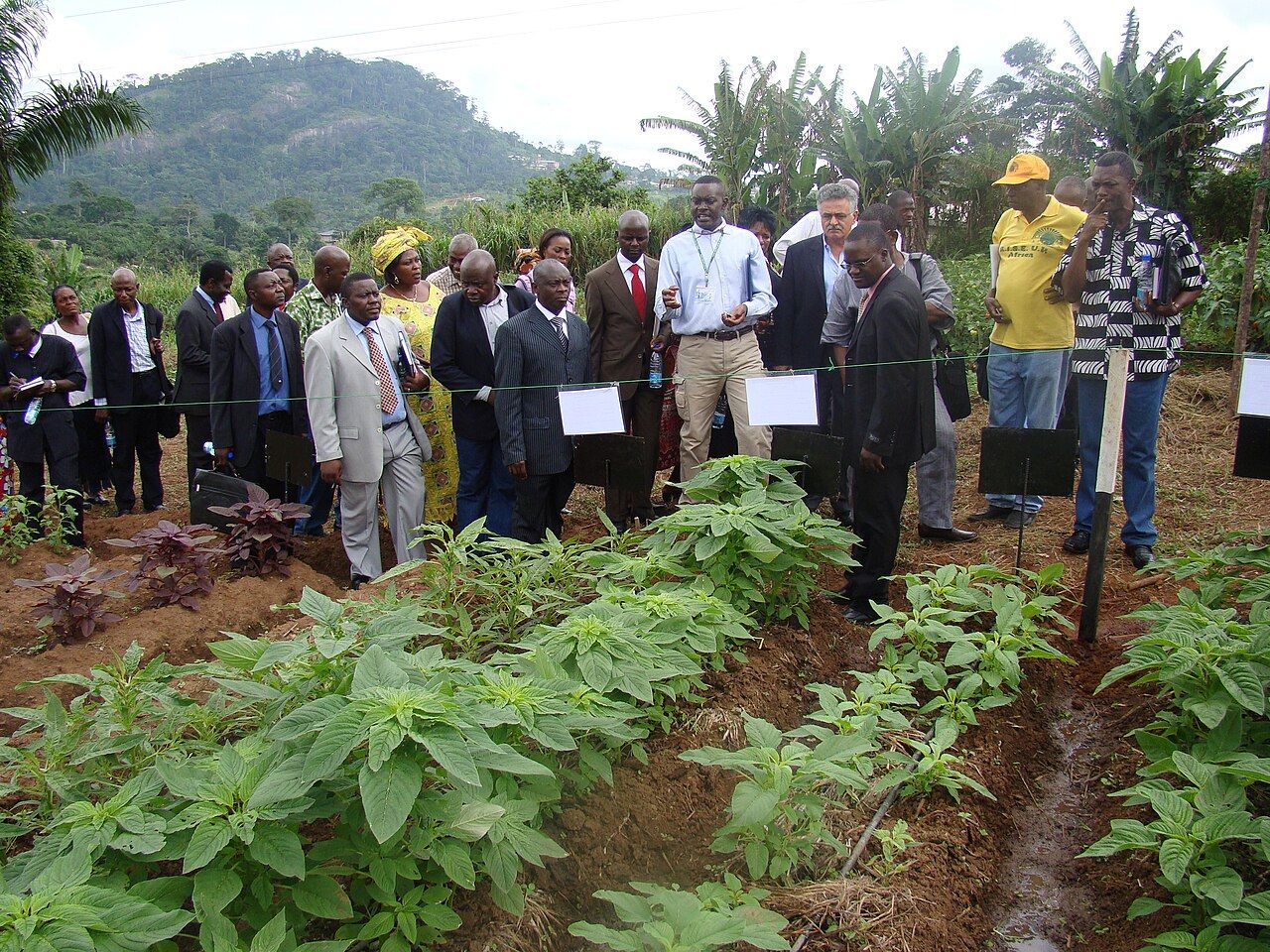
Farmers and visitors examining a vegetable plot together. Photo: SuSanA Secretariat · CC BY 2.0 · source
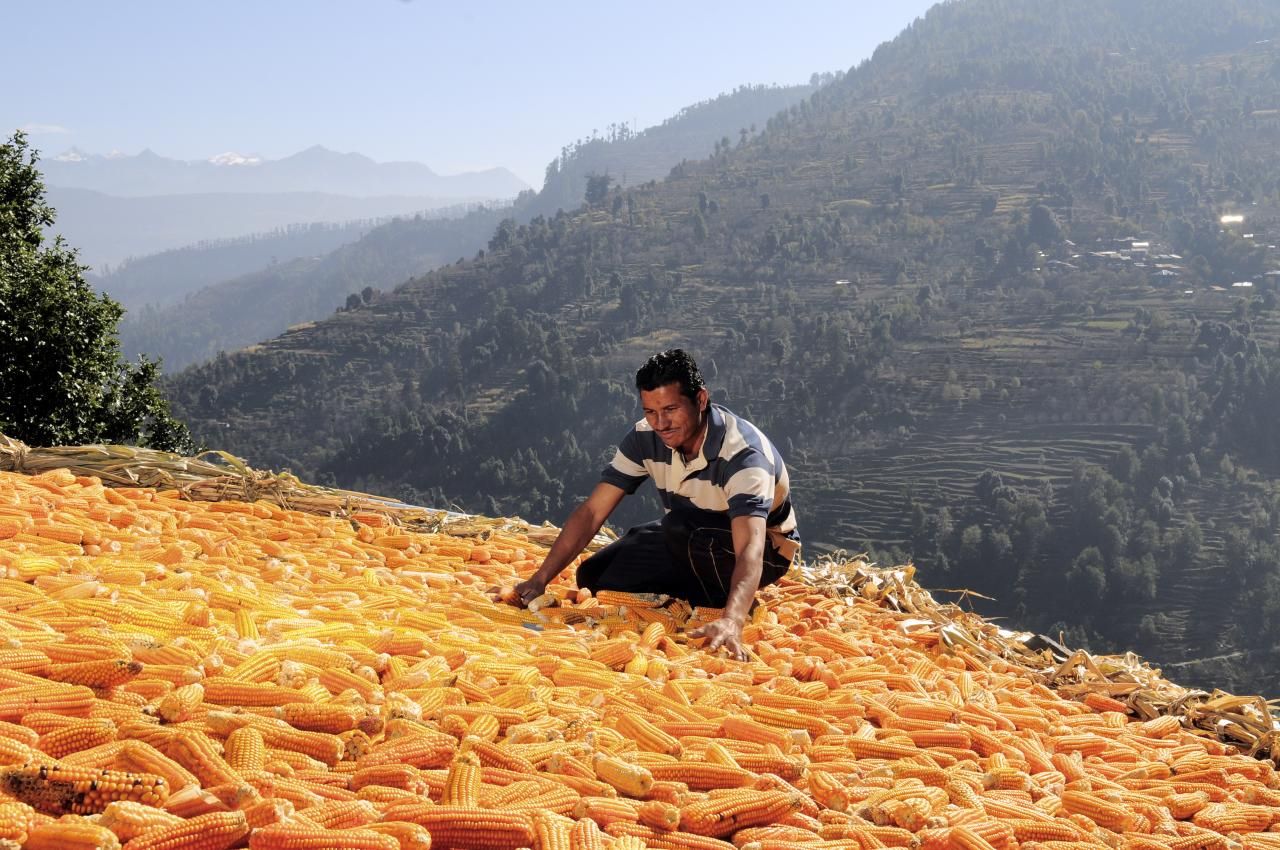
Spreading harvested maize cobs to dry. Photo: CIAT · CC BY-SA 2.0 · source
Five guided solutions
Each solution follows the Global Solutions pattern: the problem, how it works, the steps, the outcome you can expect — and the boundary where a licensed professional must take over.
Solution 1 of 5
Know your soil before you plant
The problem. Farmers often fertilise by habit or by a neighbour's recipe, spending on nutrients the soil already has while the one it lacks goes missing.
How it works. Soil is a pantry with an inventory. Simple observation — colour, texture, drainage, past yields — plus an affordable laboratory or extension test where available, tells you what the pantry holds before you shop for it.
Practical steps
Walk the field and note differences: low spots, sandy patches, tired areas.
Take small samples from several spots, mix them, and submit for testing where a service exists.
Record last season's crop, inputs and yield for each plot.
Apply organic matter — compost, manure, cover crops — as the foundation of fertility.
Match fertiliser type and quantity to the test result and the crop, not to habit.
Expected outcome. Inputs bought for a reason, healthier soil each season, and yields that stop surprising you.
⚠ Professional boundary. Agrochemicals carry label laws and safety rules. Follow them exactly and seek your local extension officer's guidance.
Solution 2 of 5
Keep more of the harvest
The problem. A painful share of food is lost after harvest — to moisture, mould, insects, rough handling and late sales — before it can feed anyone or earn anything.
How it works. Post-harvest loss is a chain of small leaks: harvesting at the wrong moisture, drying on bare ground, storing in damp or pest-friendly conditions. Each leak has a simple, proven plug.
Practical steps
Harvest at maturity and dry on raised platforms or tarpaulins, never bare soil.
Dry grain to safe moisture before bagging — bite-test or use a moisture meter where available.
Store in clean, dry, sealed containers or hermetic bags off the floor.
Inspect stored produce regularly and act at the first sign of pests or mould.
Plan buyers before harvest so produce moves while quality is highest.
Expected outcome. More food to sell or eat from the same field — the cheapest harvest is the one you already grew.
⚠ Professional boundary. Never use chemicals not labelled for stored food, and never store food in containers that held fuel or pesticides.
Solution 3 of 5
Water crops wisely
The problem. Both too little and too much water cut yields: drought starves the crop, while flooding drowns roots and washes away fertiliser.
How it works. Irrigation is scheduling, not just supply. Knowing your soil's feel, the crop's thirsty stages (flowering and grain-filling especially), and simple methods — basins, furrows, drip lines — puts water where and when it pays.
Practical steps
Learn the squeeze test: soil that holds a ball holds moisture for most crops.
Prioritise water at flowering and fruiting, the stages that decide yield.
Mulch between rows to slow evaporation and suppress weeds.
Choose drip or furrow methods that wet the root zone, not the paths.
Keep a simple rain and irrigation diary to learn your field's rhythm.
Expected outcome. Steadier yields in dry spells and less money pumped or carried as waste.
⚠ Professional boundary. Water use is often shared and regulated — respect community rules, permits and downstream users.
Solution 4 of 5
Keep farm records that pay
The problem. A farm run from memory cannot tell which crop truly made money, which input was wasted, or what to change next season.
How it works. Records turn farming from gambling into management: dates, inputs, labour, harvest and sales per plot. One notebook, kept faithfully, is enough to begin — and it is also the evidence lenders and buyers ask for.
Practical steps
Give each plot a page: crop, variety, planting date.
Record every input with cost — seed, fertiliser, hired labour, transport.
Weigh or count the harvest per plot, including what the family eats.
Record sales: date, buyer, quantity, price.
At season's end, total each plot's costs against its income and decide what earns its place next year.
Expected outcome. Clear answers about what pays — and a paper trail that opens doors to credit and contracts.
⚠ Professional boundary. Keep records honestly even in bad seasons; a lender trusts a farmer whose bad years are also documented.
Solution 5 of 5
Add value before you sell
The problem. Selling raw produce at the farm gate hands the most profitable steps — drying, milling, packaging — to someone else.
How it works. Simple processing multiplies value: properly dried fruit, milled grain, packaged vegetables, pressed oil. The Manufacturing department continues this journey with costing and quality — the two departments are designed to be read together.
Practical steps
Choose one product with steady local demand and available raw material.
Learn the hygiene and quality standard buyers expect for it.
Start with the simplest reliable process and master it before expanding.
Cost the product fully — see the Manufacturing department's unit-cost topic.
Package cleanly, label honestly, and sell where the added value is recognised.
Expected outcome. More income from the same harvest, and produce that can travel to better markets.
⚠ Professional boundary. Food processing is regulated for good reason — register as required and meet your district's food safety rules.