A country grows richer when it processes what it produces. This department shows how small and growing manufacturers can turn raw materials into quality packaged products, understand their true costs, and run orderly, safe production.
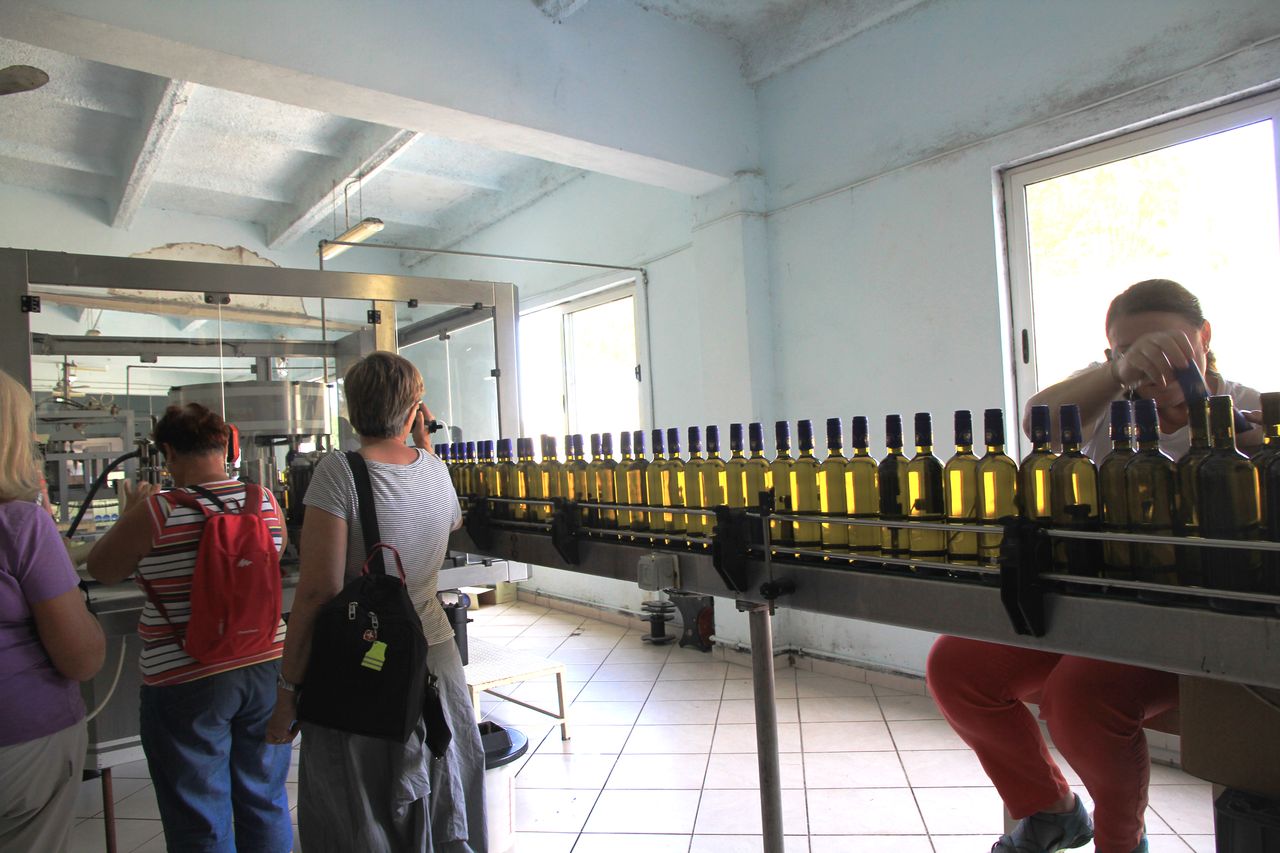
A bottling line inside a small drinks factory. Photo: Karelj · CC BY-SA · source
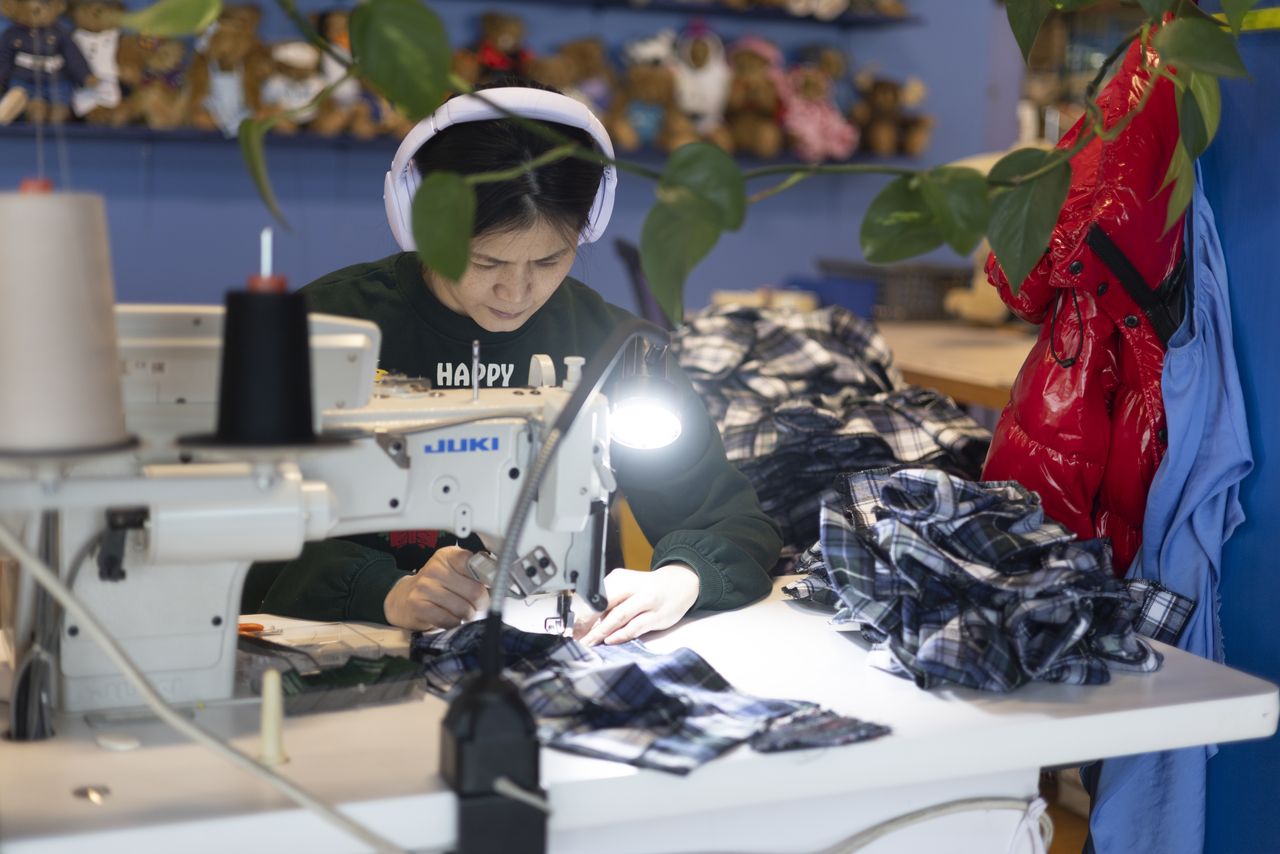
Sewing garments at an industrial machine in a small factory. Photo: Tessa Bury · CC BY · source
Five guided solutions
Each solution follows the Global Solutions pattern: the problem, how it works, the steps, the outcome you can expect — and the boundary where a licensed professional must take over.
Solution 1 of 5
Turn farm produce into packaged products
The problem. Fresh produce gluts at harvest and vanishes weeks later; processing stretches the season and the income with it.
How it works. Drying, milling, fermenting, pressing and packing convert perishable produce into goods that store, travel and sell steadily. The right first product uses what is abundant locally and a process your team can repeat identically every batch.
Practical steps
Survey what produce is abundant, cheap in season and costly later.
Pick one product and define it precisely: form, weight, packaging, shelf life.
Master the process at kitchen scale and write down every step and quantity.
Test the product on real customers and record their verdicts honestly.
Scale one step at a time, keeping the written process as the standard.
Expected outcome. A repeatable product that earns beyond the harvest season.
⚠ Professional boundary. Food businesses need registration, hygiene inspection and honest labelling — complete them before selling.
Solution 2 of 5
Work out your true unit cost
The problem. Many small producers price by copying competitors, then discover at year's end that every sale was quietly subsidised by their own pocket.
How it works. Unit cost = everything one unit consumes: raw materials, packaging, labour time, energy, transport, and a share of rent and equipment wear. The break-even calculator in the Calculator Centre turns your numbers into the volume you must sell to survive.
Practical steps
List every cost that exists because the product exists.
Add materials, packaging, labour minutes and energy per unit.
Compare the total with your selling price — the difference is your true margin.
Re-run the numbers whenever a major input price changes.
Expected outcome. Prices built on knowledge, and early warning when a product cannot pay its way.
⚠ Professional boundary. Costing is arithmetic, not a guarantee of sales. Test demand before committing to large production.
Solution 3 of 5
Find the bottleneck in your workshop
The problem. Output of a whole workshop is set by its slowest step; speeding any other step only builds a bigger pile in front of it.
How it works. Walk the process in order and time each stage. The stage where work queues up is the bottleneck — improve that one first: a second pair of hands at peak times, a jig, a repair, or rescheduling may unlock the whole line.
Practical steps
Map every step from raw material to packed product, in order.
Time each step over a normal day and note where queues form.
Ask why the slow step is slow: machine, skill, layout, or waiting for inputs?
Apply the cheapest effective fix to that step only.
Re-measure; the bottleneck will have moved — repeat the exercise.
Expected outcome. More finished product from the same people and machines.
⚠ Professional boundary. Never relieve a bottleneck by removing a safety guard or a quality check.
Solution 4 of 5
Quality checks that catch defects early
The problem. A defect found by your customer costs reputation, refunds and the relationship; the same defect found at your bench costs a minute.
How it works. Quality is a rhythm of small checks at defined points — incoming materials, first piece of each batch, periodic samples, final inspection — recorded on a simple sheet so patterns become visible and fixable.
Practical steps
Define what 'good' looks like for your product, in writing, with a sample kept at the bench.
Inspect incoming materials and reject what fails, kindly but firmly.
Check the first item of every batch before full production runs.
Sample at fixed intervals and record defects by type.
Review the record weekly and fix the most frequent cause first.
Expected outcome. Fewer returns, steadier reputation, and customers who reorder without fear.
⚠ Professional boundary. Safety-critical products (electrical, structural, food, children's) carry legal standards — meet them fully or do not make the product.
Solution 5 of 5
Package and label for the market
The problem. Good products in poor packaging are judged as poor products; packaging protects, informs and persuades in that order.
How it works. Choose packaging for the journey the product will take — heat, humidity, stacking, transport — then make the label do its legal and honest work: name, contents, weight, maker, dates, and storage guidance.
Practical steps
List the hazards of the journey: moisture, crushing, sunlight, delay.
Choose the simplest packaging that defeats those hazards, and test it with a real trip.
Design the label with all required information in readable type.
Print batch or date marks so any problem can be traced.
Photograph the packed product; if it does not look trustworthy, improve it before selling.
Expected outcome. Products that arrive intact and are trusted at a glance.
⚠ Professional boundary. Labels must never claim properties, contents or certifications the product does not have — that is both dishonest and illegal.