Ethics, Religion & Human Values
Christian education, biblical knowledge, philosophy and moral leadership — for life in a changing world.
Starter edition · Last reviewed 13 Nov 2026The challenge
Every society runs on answers to questions that are not technical: What is a human being worth? What do we owe one another? What makes a life good? For most of humanity those answers are shaped by faith — and in a plural world, understanding our own convictions deeply, and our neighbours’ respectfully, is a form of literacy as real as any other.
This centre is the knowledge home of that literacy: the Christian faith taught clearly from Scripture, the world’s religious landscape described fairly, and ethics explored with honesty — what people of different convictions share, and where they truly differ.
What the evidence says
Practical solutions
- Read Scripture whole, not in fragments: read books of the Bible through, in context, and let the text correct the quotation — that discipline built this site’s Bible wing.
- Hold conviction and humility together: "Always be ready to give an answer… yet with gentleness and respect" (1 Peter 3:15) is the pattern for every hard conversation.
- Learn your neighbours’ faiths accurately — from their own sources, not caricatures. Accuracy is a form of love of neighbour.
- Practise the shared virtues: honesty, mercy, justice, generosity and courage command respect across traditions; a life that embodies them persuades more than arguments.
- Bring ethics to new frontiers: AI, bioethics and digital life need moral reasoning now, not after the damage (see the AI and Misinformation centres).
- Teach the next generation deliberately: stories, habits and honest answers to hard questions — values are caught more than taught, but they are also taught.
Study a passage of Scripture in five steps
- Read it in its place: the whole chapter, noting where it sits in the book and the Bible’s larger story.
- Ask what it meant then: who is speaking, to whom, in what situation? Context protects us from making the text say anything we wish.
- Mark the pattern: what does it reveal about God’s character, human nature, and the way of life it commends?
- Carry it across: what does obedience look like in your setting — concretely, this week?
- Pray and record: write one sentence of response and one action taken. Study that ends in life has reached its goal.
Test yourself
Questions people ask
Is this centre a church or ministry service?
No — it is a knowledge centre for Christian education and biblical literacy, part of the platform’s learning mission. The site’s Bible wing holds the online Bible itself; worship, pastoral care and fellowship belong to your local congregation.
How does this centre treat other religions?
Fairly and factually: described from reliable sources and their own self-understanding, without caricature — while this site’s own conviction, stated openly, is Christian. Respect for people and clarity about beliefs belong together.
Where should a beginner start with the Bible?
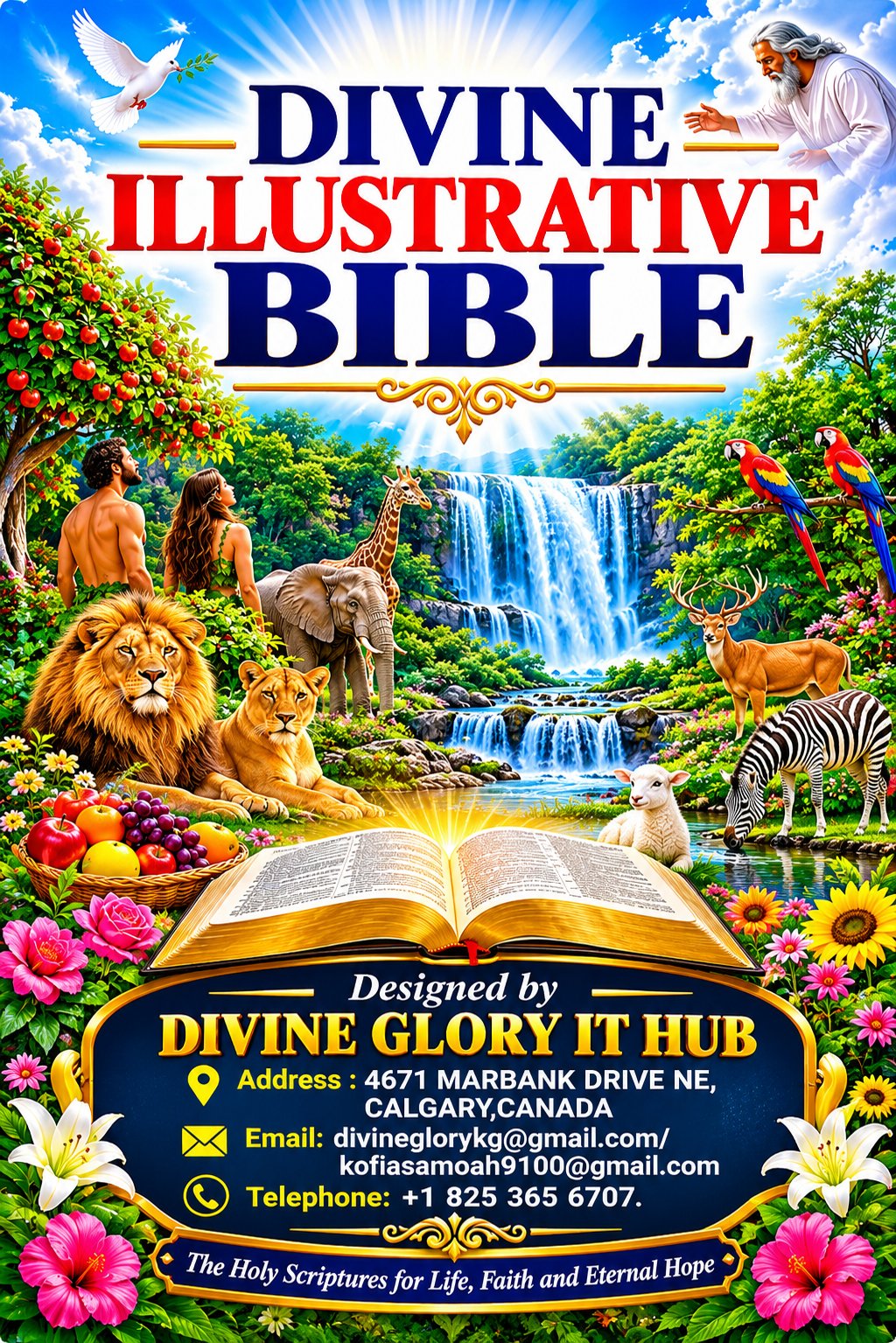
With a Gospel — Mark for pace, John for depth — read a chapter a day with the five-step method above. The Divine Dual Bible and Divine Illustrative Bible apps exist precisely to companion that journey, in English and Asante Twi.
References
Facts above are labelled with their sources and dates. Where this centre offers guidance, it is educational information to help you decide — not a substitute for advice about your own situation.